A couple of months ago, I was driving home from the office on a Saturday afternoon, when I realized it was time to make a change at work. I've been lucky to work on a great product with a great team. People will often say that before they leave a product and team, but I really mean it. And so, I knew it wasn't the product or team that had to change, but rather my role working on that product with that team.
In short, I was beginning to become complacent. I felt my job was important, and that I was doing well with it (though by no means have I learned all there is to learn about it nor would I claim to be the best at it!), but the passion and the challenge were beginning to fade. The first half of my almost year and a half as a Program Manager was spent planning and designing software features. The second half was spent leading feature teams to deliver software features and working closely with customers and partners.
But the one thing I found myself missing... the thing I went to school to learn and did in small doses all through college... and regularly did at night while spending the day as a PM... was actually developing the software - creating something out of nothing.. creating software in Visual Studio, not software specifications in Microsoft Word. The more I began to realize I was missing it, the more I began to resent every moment I spent working on an Excel spreadsheet or a Powerpoint presentation. To test the waters, I began to write code here and there, providing tools to fill gaps in the early pre-Beta versions of the product I've been working on. Suddenly, I remembered what it felt like to look at the clock after 5pm and think to myself "gee, where did the day go?".
Eventually, I discussed these feelings with the management on my team, and they were incredibly supportive. Just several weeks later... it's official that I'll be resigning my Program Manager hat and replacing it with a shiny new Software Development Engineer one (at least, it looks shiny from here).
A whole bunch of thoughts have been going through my head lately. I've formed some strong opinions about the Program Management role, having worked with several hundred PMs in my time thus far. I'm a little bit nervous about my new role, though I've always felt that if one doesn't think to himself "Oh f***, I'm in way over my head" after the first week at a new job, it's probably not a challenging enough job. I think there's a steep learning curve ahead of me, and I hope that once I conquer it, I'll still feel as passionate, challenged, and engaged as ever.
Onwards!
(Oh, and as a quick aside.. because I can't resist throwing this in here.. I got my hands on a Zune for the first time today, and it's REALLY REALLY SEXY. I don't think I'll be able to resist buying one of these babies..)
Tuesday, September 26, 2006


Wednesday, September 20, 2006
White & Nerdy

The new Wierd Al song/video White & Nerdy is awesome.
Unfortunately, its leakage to YouTube ruined Weird Al's exclusive world premiere on AOL.
It seems for every copy that gets taken down, 30 new ones are posted to YouTube (some of these are spoofs).
Given the reality of the fact that far more people (like me - and probably now you) will have ended up seeing this video on YouTube than on some exclusive AOL premeiere, it's lame that artists and labels are still sicking the RIAA on sites like YouTube rather than embracing them and figuring out how to adapt their business models to best leverage them.
Tuesday, September 19, 2006
Recommendations: Stocks/Finance/Investment tracking sites
Can anyone recommend a web site I can use to track both investments I've made and investments I may be interested in making?
I don't have a long list of requirements, but supporting individual stocks on foreign exchanges is key (i.e. Lenovo: 0992.HK, HTC: 2498.TW). This requirement alone seems to rule out SocialPicks, Google Finance, and MSN Money (Google will show the stock info but not support adding it to a portfolio).
Yahoo Finance is the only one I've found that supports adding such stocks to a portfolio for tracking, but the design is rather stale, boring, and just not fun to use.
I'm not looking for a brokerage site, paid service, rich client software, or a sidebar/dashboard/portal gadget/widget (unless it's so cool I can't afford to not check it out).
Any recommendations? :-)
I don't have a long list of requirements, but supporting individual stocks on foreign exchanges is key (i.e. Lenovo: 0992.HK, HTC: 2498.TW). This requirement alone seems to rule out SocialPicks, Google Finance, and MSN Money (Google will show the stock info but not support adding it to a portfolio).
Yahoo Finance is the only one I've found that supports adding such stocks to a portfolio for tracking, but the design is rather stale, boring, and just not fun to use.
I'm not looking for a brokerage site, paid service, rich client software, or a sidebar/dashboard/portal gadget/widget (unless it's so cool I can't afford to not check it out).
Any recommendations? :-)
Sunday, September 17, 2006
Sexy Cingular 3125 In Stores Now!
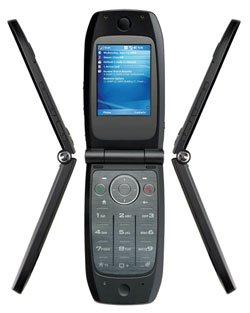
The HTC Star Trek is now available from Cingular as the Cingular 3125 for $150.
Here are some videos. It looks like Cingular chose battery life over slimness. Not sure yet whether I'm a fan of that decision because I haven't seen the Cingular version in person. Still looks cool in the video next to the RAZR though.
Saturday, September 16, 2006
loopt
 Lately, I've noticed a lot more buzz than ever before around location based services. The term seems to have been coined, and patents started flying heavily, sometime between 1995 and 2001. But at the time, the web, the phones, and the operator infrastructures just weren't where they needed to be to bring most of these services to life.
It looks like that is starting to change. The broad umbrella of "location based services" has been re-invented (aka web 2.0ified) as "location aware software", "mobile social software", etc.
The latest promising addition to the scene is Loopt, a service available to boost mobile subscribers (sidenote, has anyone ever actually met a boost mobile subscriber??).
Loopt is the first service I've seen that brings a lot of what a few friends and I explored and prototyped in college (and a mobile application of the same technology shortly thereafter) to life as a commercially available offering.
It looks pretty neat. Some features include:
- Show yourself and your friends on a map
- Get alerts when friends are nearby
- Send messages to friends and groups of friends
- Manage your profile and upload pictures from your phone
- Tag places and create events
From the Loopt "about" page:
Loopt was founded in June 2005 by friends from Stanford and MIT. The friends, all computer science majors in college, needed a better way to manage their devastating social lives. As such, the team used emerging mobile and web technologies to develop a new way to connect to the friends, events and places around them.
Loopt has outgrown its dorm room beginnings and now resides in its very own building in sunny Palo Alto, CA. Backed by Sequoia Capital and New Enterprise Associates, Loopt aims to improve the way friends communicate and connect with each other and the world around them.
Very cool.
I'm still not certain the mobile landscape is where it needs to be in order to propel an application like this into the mainstream. In fact, you would be hard pressed to find any succesful mobile application or service, relative to their non-mobile equivalents.
But, that's certain to change, and I wish Loopt the best of luck.
How to Achieve Preferred Employer Status
A checklist from Jack and Suzy Welch:
How does the company you work for measure up?
1. Preferred employers demonstrate a real commitment to continuous learning. No lip service. These companies invest in the development of their people through classes, training programs, and off-site experiences, all sending the message that the organization is eager to facilitate a steady path to personal growth.
2. Preferred employers are meritocracies. Pay and promotions are tightly linked to performance, and rigorous appraisal systems consistently make people aware of where they stand. As at every company, the people you know and the school you went to might help get you in the door. But after that, it's all about results. Now, why does all this make a company a preferred employer? Very simply, because people with brains, self-confidence, and competitive spirit are always attracted to such environments.
3. Preferred employers not only allow people to take risks but also celebrate those who do. And they don't shoot those who try but fail. As with meritocracies, a culture of risk-taking attracts exactly the kind of creative, bold employees companies want and need in a global marketplace where innovation is the single best defense against unrelenting cost competition.
4. Preferred employers understand that what is good for society is also good for business. Gender, race, and nationality are never limitations; everyone's ideas matter. Preferred employers are diverse and global in their outlook and environmentally sensitive in their practices. They offer flexibility in work schedules to those who earn it with performance. In a word, preferred companies are enlightened.
5. Preferred employers keep their hiring standards tight. They make candidates work hard to join the ranks by meeting strict criteria that center around intelligence and previous experience and by undergoing an arduous interview process. Admittedly, this factor is somewhat of a catch-22 since it's difficult to be picky before you become an employer of choice. But it's worth the effort. Talent has an uncanny way of attracting other talent.
6. Preferred companies are profitable and growing. A rising stock price is a hiring and retention magnet. But beyond that, only thriving companies can promise you a future with career mobility and the potential of increased financial rewards. Indeed, one of the most intoxicating things a company can say to a potential employee is: "Join us for the ride of your life."
How does the company you work for measure up?
Tuesday, September 12, 2006
Headed Towards Burnout
For about a week I've been working 12-14 hour days, eating poorly, not going to the gym or practicing yoga, and with the exception of jetting down to LA for a hectic weekend of sister wedding activities, certainly not doing anything social.
My DVR is filled up with TV shows I don't have time to watch, and the pile of half-read books on my desk is slowly growing to human height level. I've got 500 megabytes of wedding photos sitting on my cell phone waiting to be uploaded, and starred Gmail messages numbering in the double-digits from friends and family awaiting replies (not to mention over 350 blog posts I've yet to read and several thousand work emails to browse).
I guess I'm experiencing what Paul Graham calls Good Procrastination.
(As a sidenote, I printed out and read through about half of Graham's essays on my flight back to Seattle, and I must say I'm thoroughly impressed.)
I can feel the burnout coming on, and I'm not really sure why I'm doing it to myself. There is a big milestone coming up at work, but I think beyond that I've just felt a need lately to get back in touch with my inner computer nerd. Perhaps this is a precursor to more significant things to come.
My DVR is filled up with TV shows I don't have time to watch, and the pile of half-read books on my desk is slowly growing to human height level. I've got 500 megabytes of wedding photos sitting on my cell phone waiting to be uploaded, and starred Gmail messages numbering in the double-digits from friends and family awaiting replies (not to mention over 350 blog posts I've yet to read and several thousand work emails to browse).
I guess I'm experiencing what Paul Graham calls Good Procrastination.
(As a sidenote, I printed out and read through about half of Graham's essays on my flight back to Seattle, and I must say I'm thoroughly impressed.)
I can feel the burnout coming on, and I'm not really sure why I'm doing it to myself. There is a big milestone coming up at work, but I think beyond that I've just felt a need lately to get back in touch with my inner computer nerd. Perhaps this is a precursor to more significant things to come.
Saturday, September 02, 2006
43 Places, Things, People, and more...
I've spent the last 4 hours playing with 43 Places, 43 Things, 43 People, All Consuming, and Lists of Bests, and I'm thoroughly impressed!
On the right side of my blog's homepage, I keep big lists of stuff I read/watch/listen to/take pics of. It's a real pain to maintain, and so I love the idea of easily managing a whole bunch of information in a structured way, and interacting with it in a bunch of different ways and in different contexts for a bunch of different purposes.
Today, I keep information all over the place. I keep a few dozen books I'm planning to read in my Amazon.com wishlist (and those I've already read on my bookshelf, which get limited exposure). I've rated hundreds of movies in my Netflix account, which only my 2 Netflix friends see.
And then of course there are a whole bunch of places like restaurants I've loved or hated stored away somewhere in the back of my mind (of course, I can't ever seem to think of any when looking for that perfect place to make some dinner reservations).
These are just the tip of the scenario icebergs being nailed by The Robot Co-op (the ~7 guys down the street from me who run the sites, with funding from Amazon.com).
Anyway, as I visit more cool places and do cool things, I plan on using these sites to track them (as well as places and things I haven't, but want to do!). Check my 43 People page or RSS feed if you want to keep up.
As for All Consuming and Lists of Bests, I love the concept, but they're new, and I couldn't get them to do everything I needed just yet. So, not quite ready to move over my book, movie, and other lists. But hopefully soon (this subject probably deserves a more thought-out post of its own).
As a sidenote, it's a rare occurrence lately that I find something so profound/original/promising (albeit not new) that I spend 4 hours playing with it on a Saturday night (and countless more hours thinking about it over the next weeks no doubt). Because there's no killer app or integration deals here yet, these sites are way under-hyped, leaving a lot of room to throw new ideas against the wall and see what sticks.
That's all for now. I'm completely scatterbrained, in part because I seem to have forgotten to eat since breakfast 10 hours ago. Oops.
On the right side of my blog's homepage, I keep big lists of stuff I read/watch/listen to/take pics of. It's a real pain to maintain, and so I love the idea of easily managing a whole bunch of information in a structured way, and interacting with it in a bunch of different ways and in different contexts for a bunch of different purposes.
Today, I keep information all over the place. I keep a few dozen books I'm planning to read in my Amazon.com wishlist (and those I've already read on my bookshelf, which get limited exposure). I've rated hundreds of movies in my Netflix account, which only my 2 Netflix friends see.
And then of course there are a whole bunch of places like restaurants I've loved or hated stored away somewhere in the back of my mind (of course, I can't ever seem to think of any when looking for that perfect place to make some dinner reservations).
These are just the tip of the scenario icebergs being nailed by The Robot Co-op (the ~7 guys down the street from me who run the sites, with funding from Amazon.com).
Anyway, as I visit more cool places and do cool things, I plan on using these sites to track them (as well as places and things I haven't, but want to do!). Check my 43 People page or RSS feed if you want to keep up.
As for All Consuming and Lists of Bests, I love the concept, but they're new, and I couldn't get them to do everything I needed just yet. So, not quite ready to move over my book, movie, and other lists. But hopefully soon (this subject probably deserves a more thought-out post of its own).
As a sidenote, it's a rare occurrence lately that I find something so profound/original/promising (albeit not new) that I spend 4 hours playing with it on a Saturday night (and countless more hours thinking about it over the next weeks no doubt). Because there's no killer app or integration deals here yet, these sites are way under-hyped, leaving a lot of room to throw new ideas against the wall and see what sticks.
That's all for now. I'm completely scatterbrained, in part because I seem to have forgotten to eat since breakfast 10 hours ago. Oops.
Wednesday, August 30, 2006
XNA: The Best Microsoft TLA Yet...
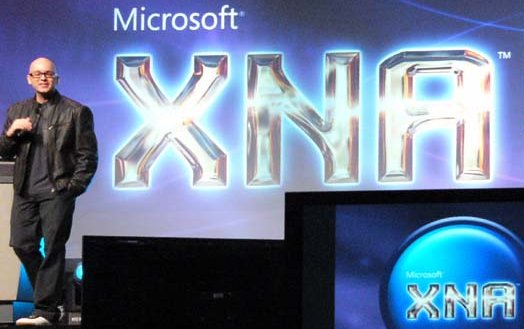
As of today, you can download XNA and build your own Xbox games.
Only the Xbox team would have the balls to give their public development framework such a cool name (XNA is a recursive acronym for XNA's Not Acronymed).
Down with TLAs!!
Tuesday, August 29, 2006
Morgan Spurlock's 30 Days On FX

I love Morgan Spurlock's new show 30 Days on FX.
The show takes people outside of their comfort zones and follows their experiences over the course of 30 days.
So far this season:
- A staunch anti-illegal immigration Minutemen volunteer lives with a family who migrated to the US illegally
- An ex-Morgan Stanley computer programmer who was forced to train Indians to do his job and was then fired when his position was outsourced to India lives in Bangalore with a family who works in a telemarketing call center.
- A feminist and staunchly pro-choice woman who works at an abortion clinic lives in a Christian, pro-life maternity home.
The series is from the same writer/director/actor as the awesome movie Super Size Me. I highly recommend checking it out.
Wednesday, August 16, 2006
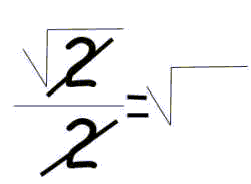
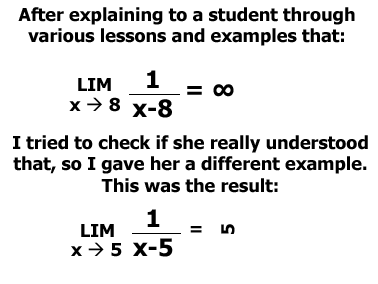
Math is hard.
Today, my coworkers and I were talking about math, physics, chemistry, and the science of food over lunch.
These images my coworker passed along made me bust out laughing...



I promise, no more "stuff adam thinks is funny" posts for awhile...
These images my coworker passed along made me bust out laughing...




I promise, no more "stuff adam thinks is funny" posts for awhile...
OMFG: Philips Bodygroom
 This interactive Philips Bodygroom ad is the most hilarious and shocking thing I've seen on the web in a long time.
It's even funnier than those tv shows about racy foreign commercials.
Go Philips and Norelco!
(Thanks Liu Shinshun for the link!)
Saturday, August 12, 2006
The Construction Worker and The Architect
 I just began reading Programming Pearls, a book I bought almost 2 years ago after seeing it on a recommended reading list Microsoft sent me after I'd accepted their job offer.
I've been reading and working through the problems in one chapter every day. It's incredibly engaging and fun - a cross between my old computer science exams in college and a more challenging version of those puzzle books I used to pick up at airport news stands as a kid (ok, I admit.. I still pick them up sometimes).
I feel that I'm at the tail end of a generation of computer programmers who were able to witness a paradigm shift in software programming. The first programming languages I learned were gwbasic/qbasic/Batch programming (cool! I can make a computer do stuff!), followed by Pascal and C (needed to mod my bbs!), C++ (high school AP and college classes), Perl/PHP/bash/tcsh (cool! I can make computers do even more stuff super-quickly and build web-apps!) and finally C# (project work during senior year of college, and Microsoft-land).
The paradigm shift I'm referring to though is mainly tied to the decrease in the amount of knowledge required to make a computer "do stuff". With the introduction of simpler languages like Visual Basic, and frameworks like .NET, 80% of the programming ability that was once required to build and end-to-end solution is no longer necessary (I've used Microsoft-centric examples here, but this is undoubtedly a platform-independent phenomenon that pre-dates both VB and .NET).
Even the most complex of operations continue to become simpler. Let's look at 2 examples I stumbled upon recently...
Example 1: Sorting an Array of User Defined Objects
Let's say you have an array containing username strings. Once upon a time, you, the programmer, would write your own sorting function if you wanted to order these strings. Modern programming frameworks have built-in functions to sort arrays of strings, and you don't need to know a single thing about sorting algorithms.
Okay, so now let's say you've created an object (i.e. a struct, class) to represent a "user". It contains a username string, and a whole bunch of other information like a full name and email address. In the not so distant past, you, the programmer, would write your own sorting function if you wanted to order these user-defined user objects (because the programming framework did not know how to sort your object (should they be sorted by username, by full name, by email address?). Modern programming frameworks allow you to implement a comparison function (i.e. IComparable.CompareTo(), which will be used by the framework's built-in sorting functions to sort your user-defined object.
Example 2: Multithreaded Windows Forms Programming
It used to be the case that if you wanted to build even the simplest Windows Forms application that did something time-consuming in the background without locking up your UI, you needed to master the
So, getting back to my point here, 80% of what once required significant programming ability (i.e. ability to devise a sorting algorithm), now requires significant programming framework domain knowledge instead - something which, in my opinion, is much easier to teach and learn (and it is now probably most of what is taught and learned at trade schools and training classes).
So what about the other 20%?
I believe that this is where the true value of a software engineer still lies - along the lines of the Pareto principle - where 80% of value is brought by 20% of resources. Lots of people out there have the knowledge and tools to be a construction worker, but how many can architect a skyscraper?
At The University of Michigan, I spent 4 years studying Computer Science, and learned nothing about Visual Studio, C#, .NET, or many other skills required to function as a Windows software developer today. In their place, I learned about propositional and predicate logic, set theory, function and relations, growth of functions and asymptotic notation, combinatorics and graph theory, discrete probability theory, techniques and algorithm development and effective programming, top-down analysis, structured programming, testing, program correctness, program language syntax and static and runtime semantics, scope, procedure instantiation, recursion, abstract data types, parameter passing methods, structured data types, pointers, linked data structures, stacks, queues, arrays, records, trees, algorithm analysis and O-notation, priority queues, hash tables, binary trees, search trees, balanced trees and graphs, searching and sorting algorithms, recursive algorithms, basic graph algorithms, greedy algorithms, divide and conquer strategy, instructions executed by a processor and how to use these instructions in simple assembly-language programs, stored-program concept, datapath and control for multiple implementations of a processor, performance evaluation, pipelining, caches, virtual memory, input/output, finite automata, regular languages, pushdown automata, context-free languages, Turing machines, recursive languages and functions, computational complexity, database design, integrity, normalization, access methods, query optimization, transaction management and concurrency control and recovery, and much much more.
Getting back to the paradigm shift... I think the short of it is that abstracting out most of the underlying knowledge and ability to engineer great software is a great thing - especially for professionals who view "software engineering" as a means to an end, rather than the end itself.
But for those out there who are looking to engineer truly original, scalable, and otherwise high quality software, Programming Pearls is reminding me so far that a great set of tools, and knowledge about those tools, can't replace an underlying depth and breadth of knowledge and ability of a true computer scientist.
I'd highly recommend every software developer reading this blog check out the book...
The Design of Everyday Things
Let it be known that I am a very gentle book critic. I'm humbled by the wealth of information out there. I expect that I still have a lot to learn from a lot of people on a lot of subjects, and if I can pick up a book and learn even just a few new things, I'm satisfied. If the book is engaging, if I learn many new things, well, that's all bonus. You can see a list of books I've liked on the right-hand side of my blog - most of which I've given positive reviews at some point on this blog.
As gentle of a critic as I generally am, I must say that The Design of Everyday Things (I won't even link to this book's Amazon.com page) was a huge disappointment.
Originally entitled "The Psychology of Everyday Things", it was later renamed to sell more copies. Since the time I picked it up at the book store about a month ago, it also seems to have gotten a Web 2.0-ified new cover...
Old cover

New cover
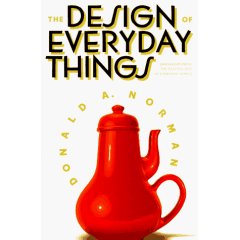
Author, and "expert" on all things "design"

The way this book read was as follows.. the author seemed to have a huge pet peeve, bordering on obsession, with everyday things that were not designed with their intuitive factor trumping all other factors (physical appeal, price, etc). The chapters are a succession of rants, calling out widely-known problems (VCRs are hard to work, rows of light switches are confusing), and providing less-than-creative-or-optimal solutions (add an on-screen display for the VCR, mount a custom-made switchbox on the wall that looks like the map of a room - right - elegant).
The author rants about a panel of flush cabinets (which, let's say one would open by pushing to pop out or by grasping the bottom and pulling) because there is no visual indicator (i.e. a big bulky handle!) as to how to open them.
I completely agree that things should be intuitive to use. I shouldn't have to learn how to open a cabinet. That said, intuitive shouldn't necessarily trump beauty, cost, or any other factor. I don't mind taking a second to think about how to open my kitchen cabinets for the first time if they are beautiful kitchen cabinets.
Rarely is a good solution "either intuitive or elegant | simple | beautiful | inexpensive".
Unfortunately, I didn't learn anything useful from The Design of Everyday Things. I didn't learn how to design things better - just that "things should be intuitive to use" - duh. I hardly enjoyed reading several hundred pages of rants on the subject. I think the book is marketed extremely well, and that the name is quite deceiving. Most namely, while there is a science to design, the act of designing great things also involves some level of creativity and ingenuity - something I felt was passed over by this book.
Before wrapping up this rant, I'd like to provide an example of an elegant everyday-thing design - the Trofé mug from IKEA (by way of Apartment Therapy LA):

I own 4 of these 50 cent mugs. The small notch at the base allows the water to escape while drying upside down in my dishwasher.
Simple, elegant everyday-thing - one you won't learn how to design by reading a book (or not this book, at least).
As gentle of a critic as I generally am, I must say that The Design of Everyday Things (I won't even link to this book's Amazon.com page) was a huge disappointment.
Originally entitled "The Psychology of Everyday Things", it was later renamed to sell more copies. Since the time I picked it up at the book store about a month ago, it also seems to have gotten a Web 2.0-ified new cover...
Old cover

New cover

Author, and "expert" on all things "design"

The way this book read was as follows.. the author seemed to have a huge pet peeve, bordering on obsession, with everyday things that were not designed with their intuitive factor trumping all other factors (physical appeal, price, etc). The chapters are a succession of rants, calling out widely-known problems (VCRs are hard to work, rows of light switches are confusing), and providing less-than-creative-or-optimal solutions (add an on-screen display for the VCR, mount a custom-made switchbox on the wall that looks like the map of a room - right - elegant).
The author rants about a panel of flush cabinets (which, let's say one would open by pushing to pop out or by grasping the bottom and pulling) because there is no visual indicator (i.e. a big bulky handle!) as to how to open them.
I completely agree that things should be intuitive to use. I shouldn't have to learn how to open a cabinet. That said, intuitive shouldn't necessarily trump beauty, cost, or any other factor. I don't mind taking a second to think about how to open my kitchen cabinets for the first time if they are beautiful kitchen cabinets.
Rarely is a good solution "either intuitive or elegant | simple | beautiful | inexpensive".
Unfortunately, I didn't learn anything useful from The Design of Everyday Things. I didn't learn how to design things better - just that "things should be intuitive to use" - duh. I hardly enjoyed reading several hundred pages of rants on the subject. I think the book is marketed extremely well, and that the name is quite deceiving. Most namely, while there is a science to design, the act of designing great things also involves some level of creativity and ingenuity - something I felt was passed over by this book.
Before wrapping up this rant, I'd like to provide an example of an elegant everyday-thing design - the Trofé mug from IKEA (by way of Apartment Therapy LA):

I own 4 of these 50 cent mugs. The small notch at the base allows the water to escape while drying upside down in my dishwasher.
Simple, elegant everyday-thing - one you won't learn how to design by reading a book (or not this book, at least).
Saturday, August 05, 2006
A Gray Twilight
A quote I came across at the beginning of the 5th chapter of Built to Last...
When you read this quote, how does it resonate with you?
Have you dared mighty things? Experienced glorious triumphs? Are your winnings checkered by failure? Or... are you living in the gray twilight?
The biggest risk I've taken in my professional life was dropping out after 1 year of college at age 19 to work at a startup in Silicon Valley in 2000 (and in the process, turning down a comparable offer from rising dot com star Excite@Home, which tanked shortly thereafter). The second biggest risk I've taken was later walking away from that job (and my 21-year-old $82,500 salary) to go back and finish school (the startup tanked shortly thereafter).
I went to work on this beautiful Saturday morning. The hallways were silent and dark - far different than the overcrowded EECS computer labs in college or the large, open engineering workspace at the Valley startup. I looked around for someone to get lunch with, and quickly realized it wasn't gonna happen. So I went to the Teriyaki restaurant around the corner, next to the big company that employees 30,000+ locally, and sat in the empty restaurant, eating alone.
The biggest risk I've taken in the last 15 months has been deciding in which funds to invest my 401K. How about you?
Far better to dare mighty things, to win glorious triumphs, even though checkered by failure, than to take rank with those poor spirits who neither enjoy much nor suffer much, because they live in the gray twilight that knows not victory, nor defeat.
Theodore Roosevelt, 1899
When you read this quote, how does it resonate with you?
Have you dared mighty things? Experienced glorious triumphs? Are your winnings checkered by failure? Or... are you living in the gray twilight?
The biggest risk I've taken in my professional life was dropping out after 1 year of college at age 19 to work at a startup in Silicon Valley in 2000 (and in the process, turning down a comparable offer from rising dot com star Excite@Home, which tanked shortly thereafter). The second biggest risk I've taken was later walking away from that job (and my 21-year-old $82,500 salary) to go back and finish school (the startup tanked shortly thereafter).
I went to work on this beautiful Saturday morning. The hallways were silent and dark - far different than the overcrowded EECS computer labs in college or the large, open engineering workspace at the Valley startup. I looked around for someone to get lunch with, and quickly realized it wasn't gonna happen. So I went to the Teriyaki restaurant around the corner, next to the big company that employees 30,000+ locally, and sat in the empty restaurant, eating alone.
The biggest risk I've taken in the last 15 months has been deciding in which funds to invest my 401K. How about you?
Subscribe to:
Posts (Atom)
